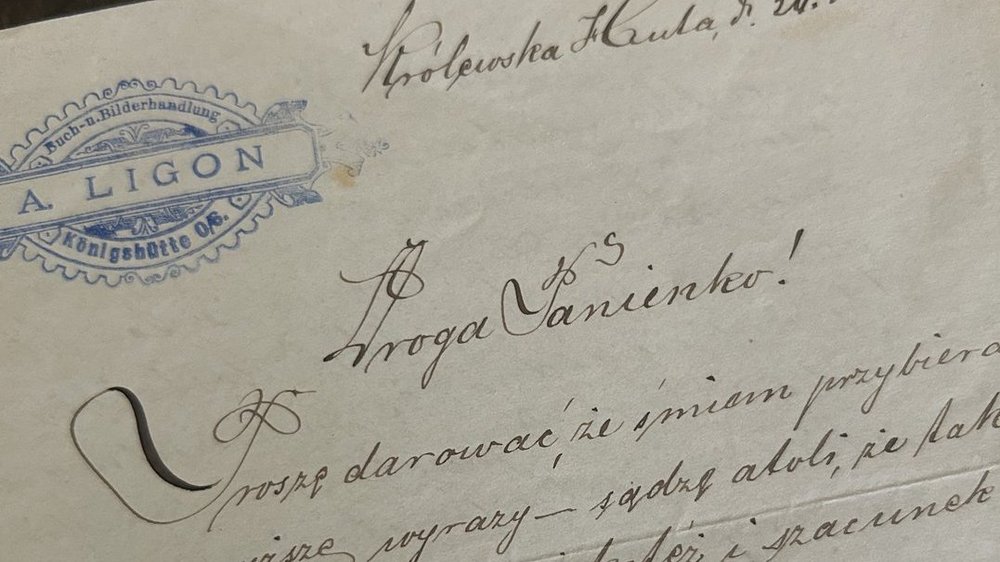
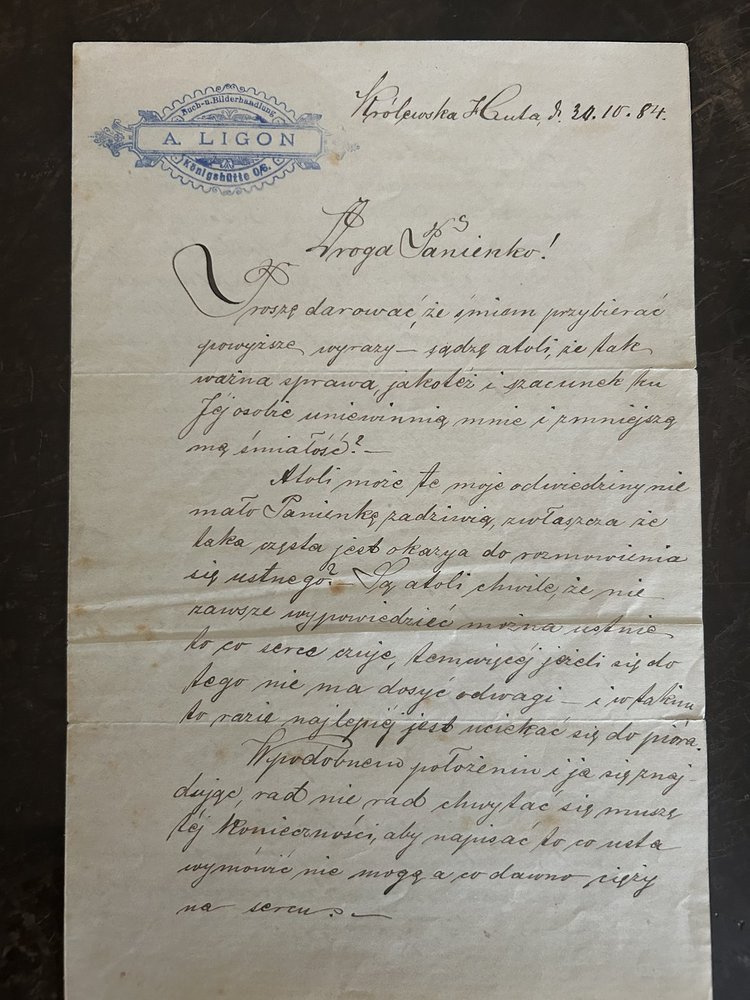
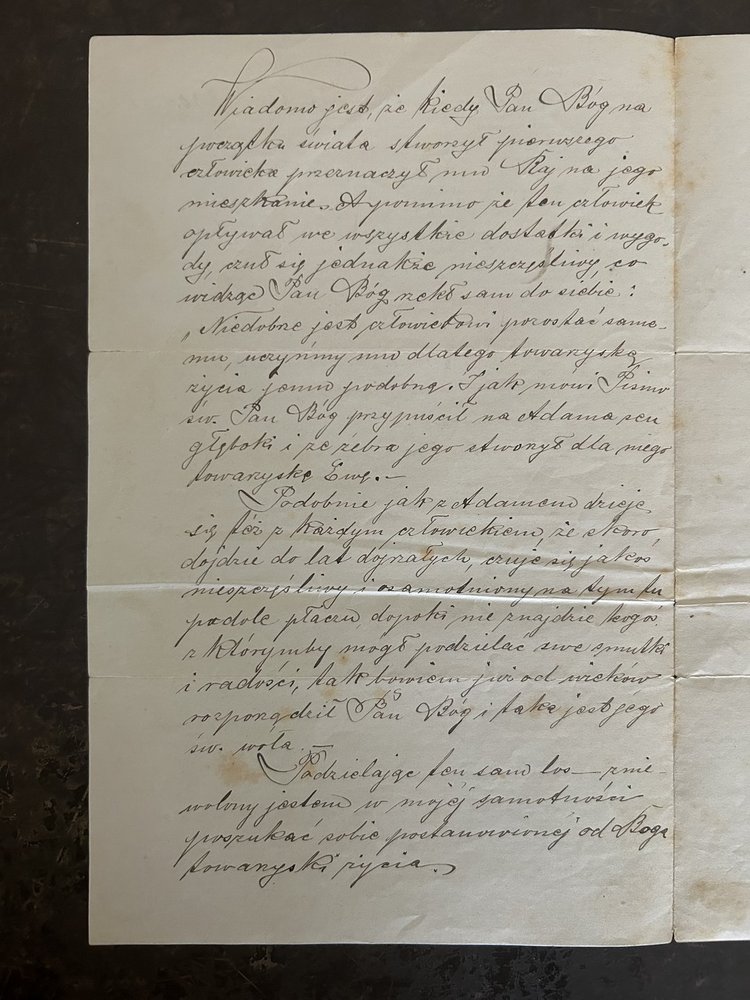
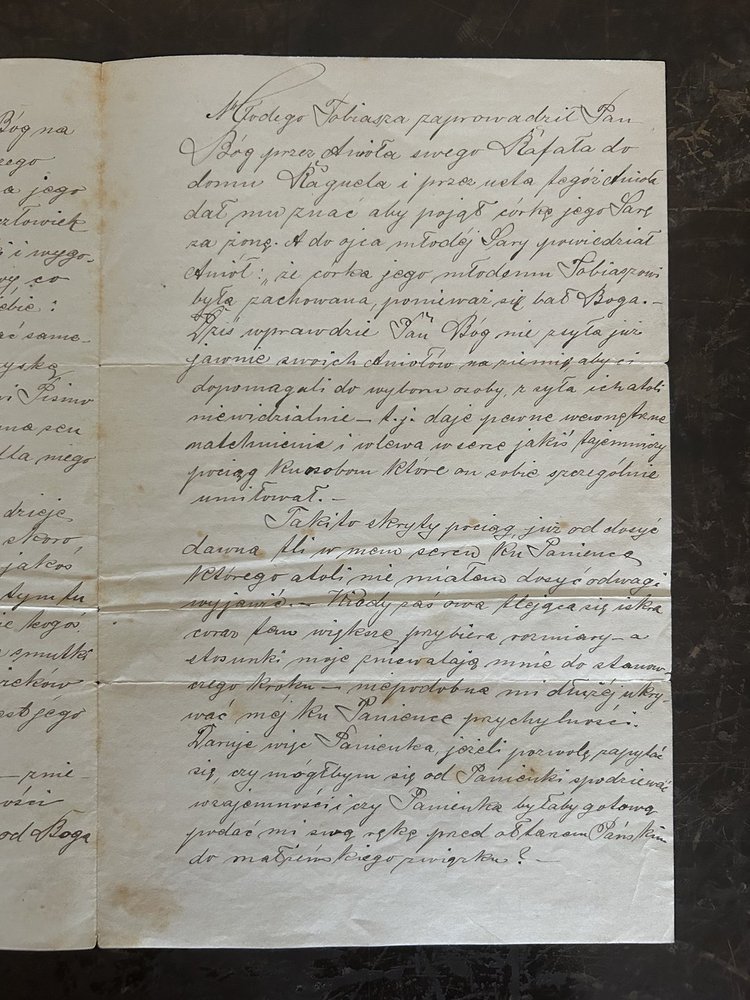
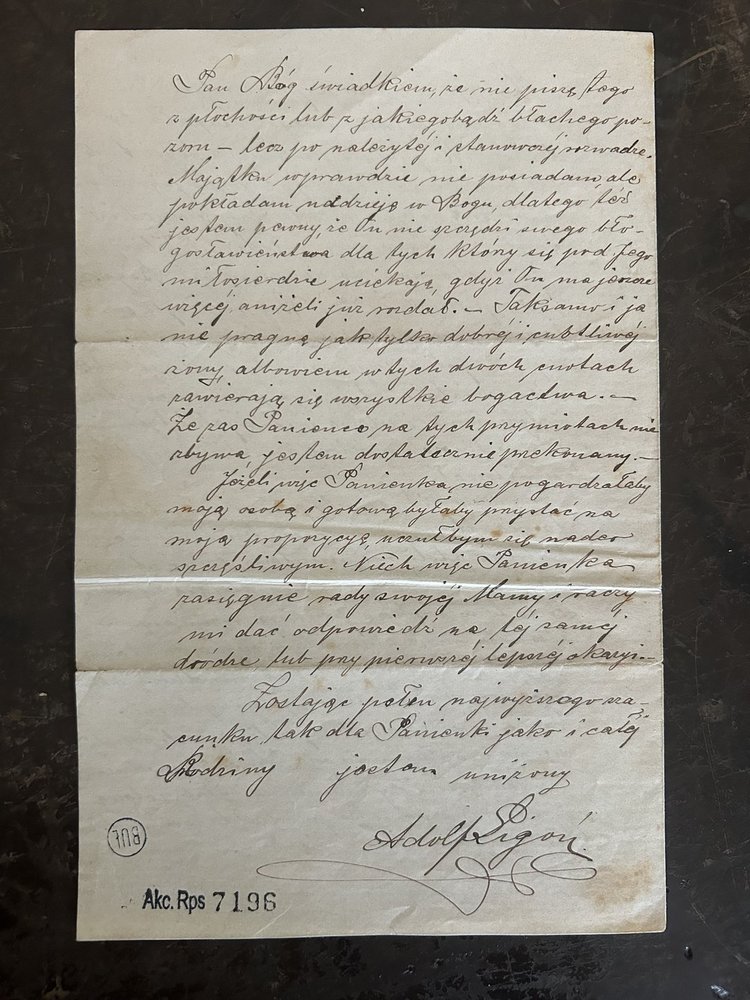
"Dear Miss! Please forgive me for daring to use the above words – but I think that such an important matter, as well as the respect for You, will excuse me and reduce my boldness? (...) It is not always possible to express verbally what one feels in one's heart, especially if one does not have enough courage – and in such a case it is best to resort to the pen. (...)
This hidden desire towards you has been smoldering in my heart for quite some time now, which I have not had the courage to reveal (...). So, please allow me to ask, Miss, if I could expect reciprocity from you and if you would be ready to offer me your hand in marriage before the altar of the Lord? (...)
If (...) you do not despise me and are willing to accept my proposal, I will feel very happy. Therefore, please consult your mother and be so kind as to give me an answer on this occasion or at the first opportunity (...)."
Adolf Ligoń (1855-1931) – a bookseller, editor, publisher, social activist and a writer is the author of the above words. The letter, dated 30 October 1884, was written in Królewska Huta (German: Königshütte – Chorzów). It is addressed to an unnamed young lady (referred to as "Miss") and concerns an unusual matter – a marriage proposal.
Ligoń wrote down on four pages everything "that has long weighed on his heart." He first mentions his shyness, loneliness and search for a life partner. At the end of the third page (!), with the usual politeness, he asks the recipient to marry him. He assures her that he is not writing these words "out of frivolity" (in the past, "frivolity" also means: unstable, reckless), but "after due and decisive consideration." He asks the Lady for the same consideration – that she should answer him after seeking her mother's advice.
How did this story end? Did the young lady in the letter answer "yes" and they lived happily ever after? We don't know. However, we do know that the Silesian bookseller's efforts to find a life partner ended happily: Ligoń was married to Wiktoria, née Kawecka, with whom he had two sons: Kazimierz and Zygmunt (see PSB, vol. XVII/1, p. 326).
Adolf Ligoń's letter is one of the 19th-century handwritten documents that can be viewed at the virtual exhibition prepared as part of the project "Manuscript cultural heritage 1791-1918 from the collections of the University of Lodz Library".
The digitised document can be found in the University of Lodz Digital Library (ref. Akc. Rps. 7196):
https://bcul.lib.uni.lodz.pl/dlibra/publication/108670/edition/97660