


Honey has been used in natural medicine for centuries, supporting the treatment of many ailments. Those suffering from joint pain and rheumatism find relief thanks to its antioxidants, which combat free radicals responsible for inflammation and tissue damage. Honey also contains enzymes that aid digestion, contributing to better absorption of nutrients beneficial to joint health.
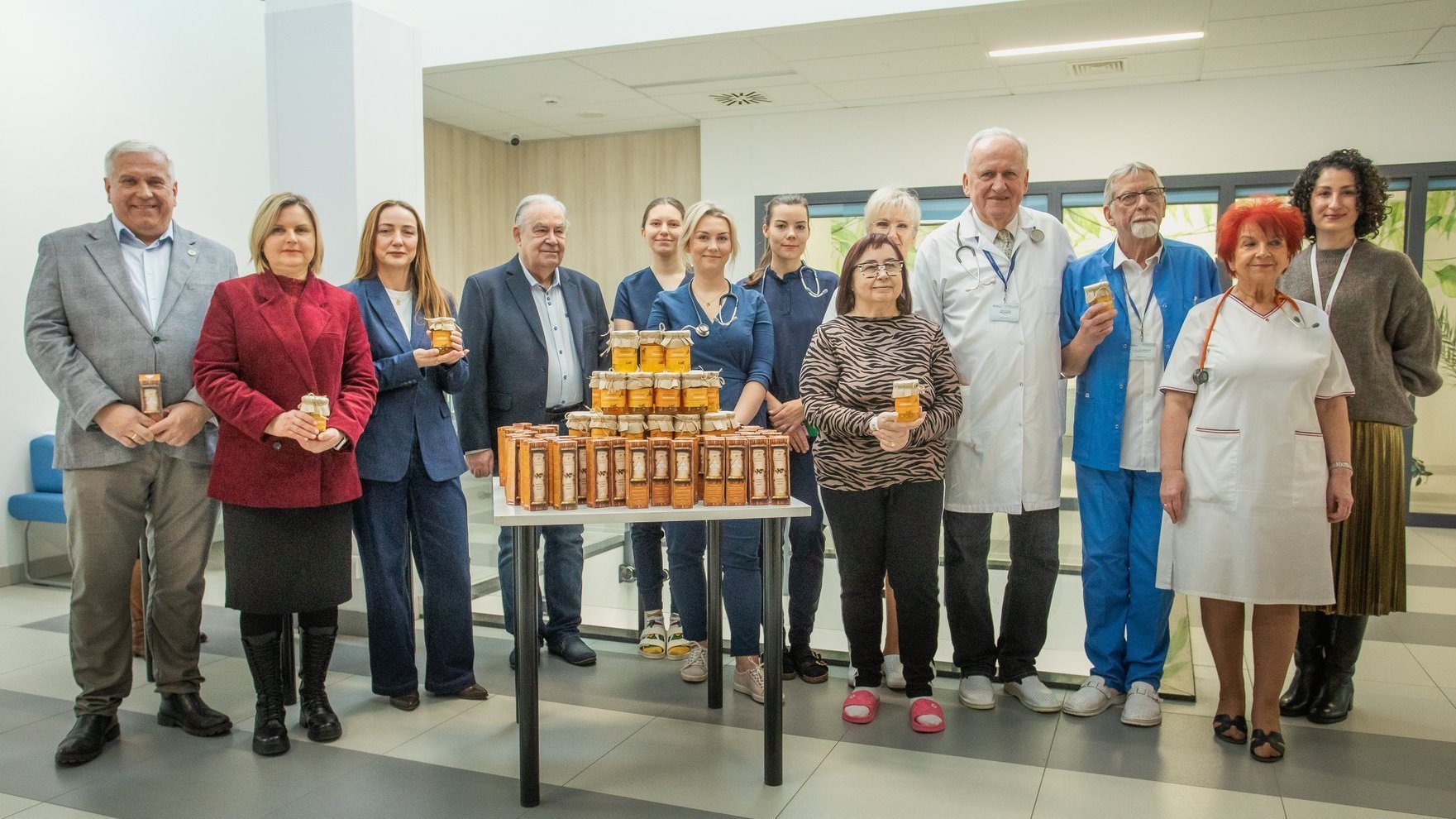
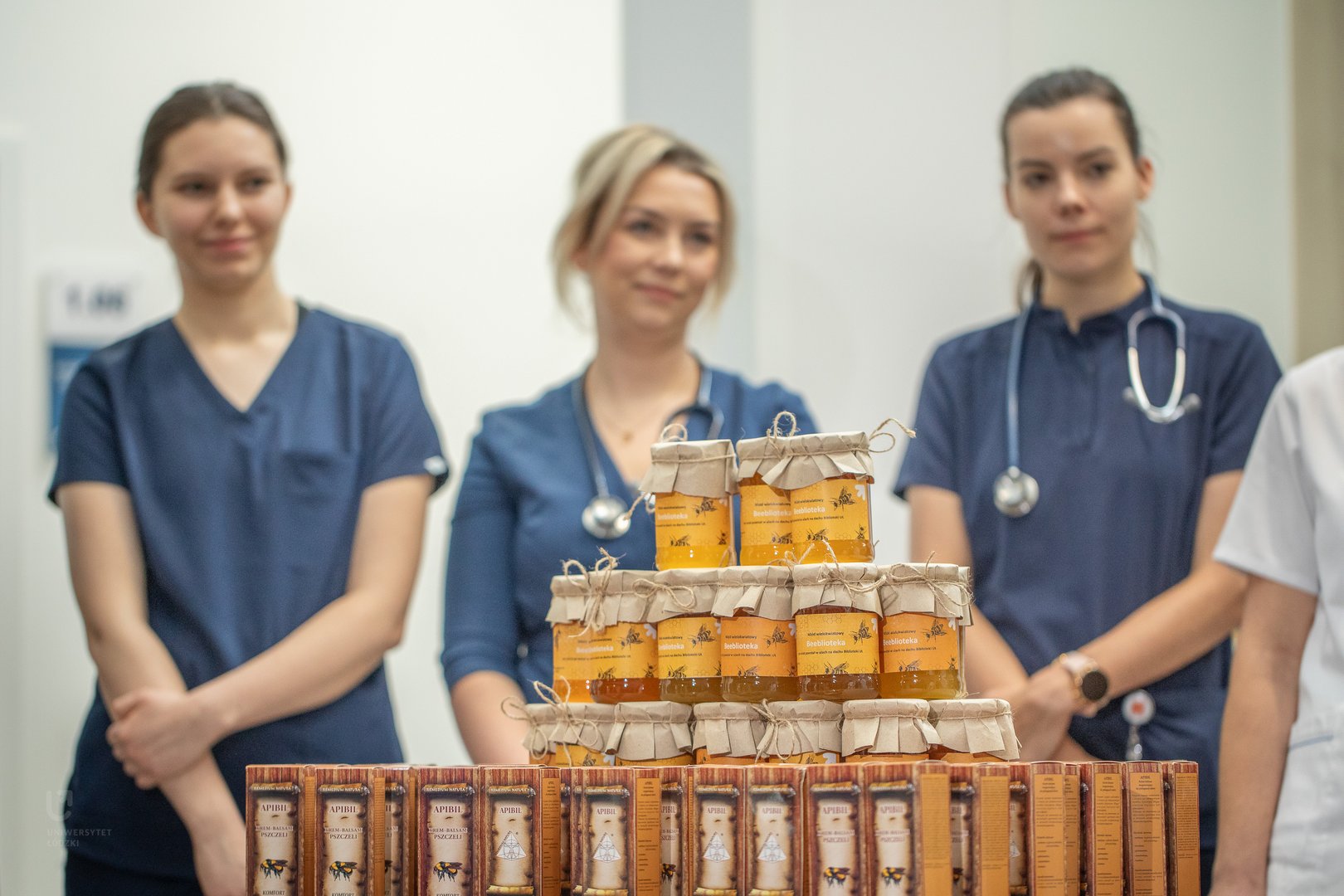
On behalf of UniLodz, the honey was presented to the hospital authorities by mgr Dorota Bartnik, Deputy Director of the University of Lodz Library. The recipients – the hospital's Deputy Director for Medical Affairs, dr n. med. Jerzy Badowski and the Head of the Department of Rheumatology and Connective Tissue Diseases, Prof. Adam Fronczak, expressed their gratitude on behalf of the patients and unanimously underlined the importance of bee products in supporting the treatment of chronically ill patients.
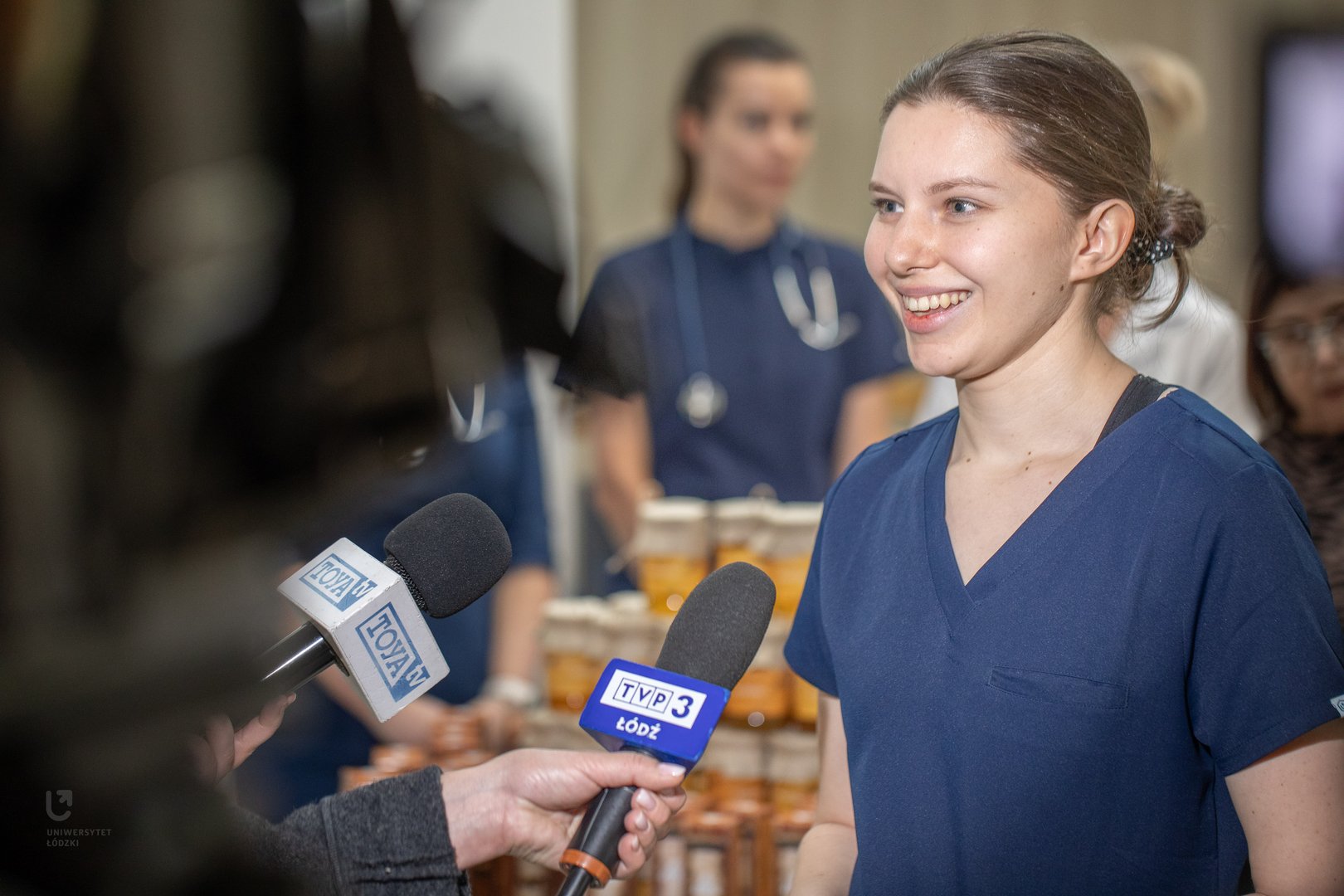
Rheumatology is a branch of medicine that deals with a group of non-traumatic disorders of the musculoskeletal system. Most of these diseases have an immunological basis, and the dominant symptom is inflammation. The main disease entity is rheumatoid arthritis, which affects up to 1.5 percent of the population. The basis of therapy is traditional pharmacological treatment, but patients often ask us about an anti-inflammatory diet that could improve their quality of life. Generally speaking, it is based on the Mediterranean model, meaning it contains omega-3 fatty acids, antioxidants and fiber. Because honey also has anti-inflammatory properties, it can be considered a very good ingredient in this diet – it inhibits inflammation and the taste of honey itself can make patients' lives more pleasant
– said Dr Grażyna Świerkowska, Deputy Head of the Department of Rheumatology and Connective Tissue Diseases.
The ward's patient representative, Izabela Sikorska-Pyrka, spoke about her struggle with a chronic, painful illness that will likely remain with her for the rest of her life.
Like every patient, I look for various ways to relieve my pain. I also use various non-medical therapies, and I think honey and bee products are fantastic. Besides, the taste of honey always improves mood, which is very important for the mental well-being of people struggling with illness – she emphasised.
DID YOU KNOW THAT…
- To produce 1 kilogram of honey, bees must visit approximately 4 million flowers!
- The average flight distance of bees is approximately 3 km, but they can cover up to several dozen.
- During a single nectar-collecting flight, a bee reaches 50-100 flowers.
- Ten hives inhabited by bee families are located on the roof of the University of Lodz Library.
- Approximately 600,000 bees live and work within them, producing honey and pollinating plants in the library area, providing significant support to the urban ecosystem.
- Honey from urban bees is in no way inferior to that produced by bees in rural apiaries, and sometimes even surpasses it in quality – it has a unique flavour and colour. This is due to the greater diversity and longer flowering period of plants in cities.
Beeblioteka [BEE-Library], the apiary on the roof top of the University of Lodz Library, is a project implemented as part of the university's sustainable development strategy, aimed at caring for nature and protecting urban flora and fauna. The concept was conceived in 2000. The green surroundings of the University of Lodz Library are ideal for bees – the proximity of Jan Matejko Park and the squares of the university campus are particularly important. The UniLodz apiary also contributes to popularising knowledge about bees and beekeeping among the academic community and residents of Lodz, and raising awareness of the immense importance of these insects to humans.
The apiary is managed daily by members of the Lodz Apiarist Association. It manages the development of the bee colonies that inhabit the hives on the roof of the University of Lodz Library, obtain bee products, protect the bees from diseases, pests and parasites, and provide them with the conditions necessary for survival. Beekeepers have also supported patients at the Copernicus Hospital this year by providing them with bee venom ointment, which, as Andrzej Kołuda, President of the association, underlined, is excellent for relieving joint pain and inflammation.
Source: The University of Lodz Library
Edit: Press Office, University of Lodz
Photos: Maciej Andrzejewski, Centre for Brand Communications, University of Lodz